


Why We Still Get on the Plane
Switzerland has spent centuries perfecting the art of being reliable. Its watchmakers are known for precision, its central bank for stability and its government for neutrality. On a research trip to Switzerland and Germany this September, we found the same qualities in many of the companies we met—businesses that rarely make headlines and rarely need to. Their earnings tend to be dependable, their balance sheets conservative and their strategies patient. That steadiness, however, is anything but simple. Like the movement inside a Swiss watch, what keeps such a business running is usually hidden from view, in local regulations and cultural nuances that no annual report fully explains. That is why we still get on the plane.
Nowhere was that clearer than in a meeting with a Swiss consumer lender, a business built on car leases and personal loans that most investors would overlook. Revenue has historically grown at roughly the pace of the economy, and profits are steady rather than eye-popping. What stands out is that it has earned mid-teens returns on its capital yet needs little of it to grow, so earnings have come back to shareholders as healthy and growing dividends. A regulatory filing can tell you that much. Understanding why those returns have held up year after year is something you learn in person.
We had been at it for the better part of an hour with the chief financial officer, working through loan losses, funding costs and the careful arithmetic of lending to Swiss households. In Switzerland, every consumer loan is reported to a national database, and lenders work through a borrower’s entire monthly budget before lending, down to the cost of the daily commute. Let a debt go to formal collection and it is recorded in an official register that landlords routinely check before granting a lease. In a country where renting is the norm and reliability is a point of pride, an unpaid debt casts a long shadow. Strict rules, a culture of thrift and a unique competitive landscape keep loan losses so low that most consumer lenders can only envy. As the meeting wound down, we asked him to sum it up. He paused, then offered three words, “Boring is beautiful.”
It was the most memorable meeting of the trip, and it set the tone for the rest of the week. Over seven days in Zug, Zurich and Munich, we met with more than a dozen companies, some long-held in our NGA portfolios and others mere explorations. Nearly all of them are in businesses most might consider dull: from cement and sealants to switchgear, freight logistics and insurance. In a time when most investment conversations find their way back to technology and artificial intelligence, these businesses seldom come up. We arrived at every meeting knowing the numbers. What we came for was the story behind them. Over the course of the week, three lessons stood out.
The first lesson was that the rules governing a business can shape its returns as much as strategy does. We saw it in Zug, with a building materials company whose European volumes have declined for several years even as revenue has continued to grow and profits faster still. Pricing discipline explains part of that resilience, but the more interesting story is how the company has turned regulation to its advantage. Europe’s aging buildings are constantly being renovated or torn down, and landfill taxes and recycling mandates have made the rubble expensive. So, contractors pay the company to take it. It breaks that rubble back down into raw ingredients, some of which can replace clinker, the most carbon-intensive part of cement. That matters because European cement makers now pay for every ton of carbon they emit, and that cost is rising. Being paid to take delivery of your raw material is a business model we could get used to. Carbon pricing is also pushing older, less efficient plants out of the industry, leaving fewer competitors and more pricing power for those that remain. As with the Swiss lender, the same rules that weigh on an industry can quietly favor the few companies best equipped to meet them.
The second lesson was that the most dependable demand is the kind nobody chooses. A few minutes away, we met with a specialty chemicals company, active in more than a hundred countries, that has kept growing even as global construction contracted over the past year. Its sealants and concrete additives are less than 1% of a project’s cost but essential to how it performs, so builders have little reason to trade down. More important, over half its revenue comes from repairing and maintaining existing structures. A leaking tunnel or cracked bridge deck gets fixed whether times are good or not.
Wear and tear is one kind of necessity. Disruption is another, as we learned over Sunday morning coffee with one of the world’s largest freight forwarders. After discussing Iran, rerouted tankers and U.S. tariffs, our host turned to something less obvious, Mother Nature. Low rainfall, heat waves and dwindling Alpine snowmelt have driven the Rhine, Europe’s busiest inland waterway, to its lowest level since records began in 1880. He described barges built to carry about a thousand containers leaving port with around four hundred, because anything heavier would scrape the riverbed. Moving that cargo by road takes hundreds of trucks for every barge, so freight rates climb quickly and capacity disappears. While this year’s low water is a generational event for the Rhine, disruption itself has become routine. As he put it, “complexity breeds opportunity.” A bridge that needs repair and a shipment that needs rerouting have something in common. Neither can wait for better times. Businesses whose earnings are derived from necessity rather than optimism tend to hold their ground when the cycle turns, and that is a quality we value.
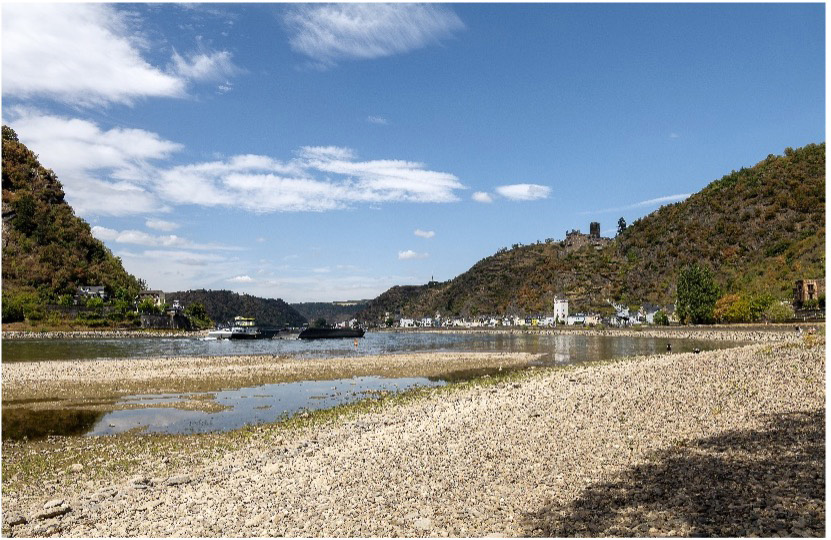
Image credit: Rolf Kranz, CC BY-SA 4.0, via Wikimedia Commons.
The third lesson was that the best way to share in the market’s biggest story is often through a business that does not depend on it. Sitting across from a maker of electrical equipment in Munich, we expected to talk about its data center business, where orders have doubled year over year. Instead, management steered us toward something far less glamorous, the local grid that carries power to homes, factories and, increasingly, those same data centers. Some 40% of Europe’s power distribution networks are more than 40 years old,i and utilities depend on the company’s equipment to modernize them. AI’s growing appetite for power is speeding up an overhaul that was already overdue, while the company’s other businesses continue to grow. We heard versions of the same story elsewhere. An insurer told us data center projects are now among the largest construction risks it underwrites, yet they remain one word in a novel that runs from crop insurance to car warranties. Each benefits from the rise of AI without being beholden to it.
The trip mattered for another reason. It was a young colleague’s first international research trip, and watching him engage with management, learning to recognize what was emphasized and what went unsaid, reinforced that this kind of judgment is built across a table, not behind a computer screen. The families we serve think in generations, and so must we. Developing the next generation of our team and passing along the process and discipline behind our decisions is how we ensure the care our clients count on today continues tomorrow.
i “European Grids.” Directorate-General for Energy, European Commission, energy.ec.europa.eu/topics/infrastructure/european-grids_en. Accessed 15 Oct. 2026.
This document contains certain statements that may be deemed forward-looking statements. Please note that any such statements are not guarantees of any future performance and actual results or developments may differ materially from those projected. The views are subject to change based on market and other conditions. This is not an offer or solicitation for the purchase or sale of any security and should not be construed as such. The information provided is for illustrative purposes only and is not intended to be, and should not be interpreted as, recommendations to purchase or sell securities. All investments contain risk and may lose value. Naples Global Advisors, LLC is governed under the Securities and Exchange Commission as an Investment Advisor under the Investment Advisors Act of 1940.